
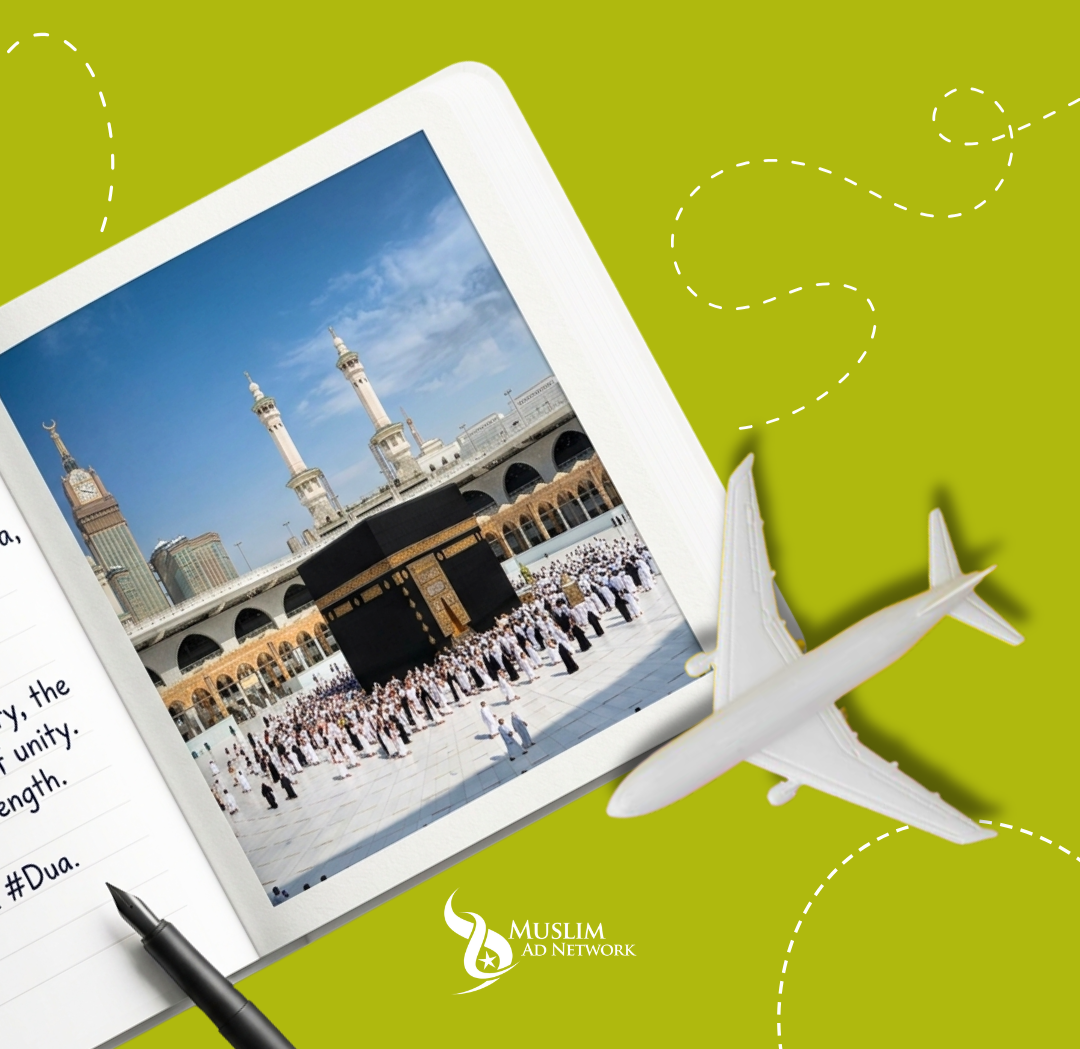
The sharp disconnect between Western PTO policies and the time required for Hajj has fundamentally reshaped the region's Muslim travel market.
That gap is redirecting millions of dollars annually away from Hajj and pouring it directly into high-frequency Umrah. Both travel agencies and major airlines are operating on legacy playbook assumptions, wasting ad spend, misjudging route profitability, and leaving millions in high-margin revenue on the table.
The Math Reshaping the Market
Hajj’s core rituals take just five to six days. Yet, for pilgrims traveling from the West, a realistic itinerary spans 14 to 21 days minimum, once visa processing, travel buffers, and the customary journey to Madinah are included. Even compressed "executive" packages targeted at shift workers rarely run under 10 days.
An American employee with the national average of 11 paid days off cannot commit to a three-week Hajj without taking unpaid leave, burning their entire annual vacation allotment, or requesting special accommodations that most employers deny. Because Hajj follows a strict lunar schedule, workers cannot shift their trip to a slower business quarter.
In the UK and Canada, tighter leave early in a worker's career reinforces the long-standing trend of deferring Hajj until later in life. This deferral was never primarily about financial readiness; it was governed by who could afford to be away from work for three consecutive weeks.
The Rise of High-Frequency Umrah
Umrah flips every constraint that makes Hajj hard to schedule.
The core rituals require hours, not days. It is bound by no fixed calendar window, annual quotas, or lottery queues. A pilgrimage can be scheduled around a corporate holiday, a school break, or a long weekend extended by a couple of leave days.
Saudi Arabia’s tourism infrastructure is actively capitalizing on this shift. Multi-entry Umrah visas valid for a full year and permitting up to 90 cumulative days in-country, signal a strategic pivot toward repeat travel as the primary growth driver.
Traditional Hajj Model: [ Accumulate Capital ] ---> ( Single, Once-in-a-Lifetime Expense )
Modern Umrah Model: [ Annual PTO Budget ] ---> ( Recurring, High-Frequency Revenue )
This structural shift has altered consumer behavior. Unlike the single-obligation nature of Hajj, Umrah is becoming an annual commitment for Western Muslims. Capital that previously sat in long-term Hajj savings accounts is now deployed in smaller, recurring increments to whichever operator offers an itinerary that fits a tight corporate window.
The Tech Factor: Nusuk & The DIY Pilgrim
This demographic shift is accelerated by technology. The Saudi Ministry of Hajj and Umrah launched Nusuk super-app lets pilgrims secure e-visas, Rawdah permits, high-speed rail tickets, and hotels directly from their phones in minutes. Nusuk's rapid evolution has fundamentally dismantled the old friction points of planning a pilgrimage.
Young, tech-savvy Western professionals no longer need traditional agents for basic logistics. They are booking spontaneous, direct-to-consumer Umrah trips during their lunch breaks.
The Aviation Blind Spot: Why Western Carriers Are Missing a High-Yield Route
Every pilgrim flight entering the holy sites must cross a designated religious boundary, the Miqat. Crossing this boundary requires travelers to already be in the sacred state of Ihram. Missing the threshold carries religious penalties or requires costly logistical adjustments.
Currently, Gulf carriers (Emirates, Qatar Airways, Etihad, Turkish Airlines, Saudia, flynas and more) capture virtually 100% of North American pilgrim transit. British Airways is one of the rare Western airlines flying directly to Jeddah. Almost all western network planners have completely conceded this airspace, treating Middle Eastern expansion solely through a traditional business travel lens (e.g., Delta's route to Riyadh for government and corporate travel, rather than Jeddah for pilgrim traffic).
This is a massive commercial misstep. Western carriers do not need daily, year-round scheduled service to profit from this market. Operating **seasonal, peak-period, or high-frequency charter routes** (e.g., during Ramadan or winter breaks) from hubs like JFK, Chicago O'Hare, or Toronto Pearson directly to Jeddah presents four major B2B advantages:
1. Recession-Proof, Inelastic Demand: Religious travel is non-negotiable. Western Muslims budget for pilgrimage regardless of economic downturns, representing a uniquely resilient demand base.
2. High Premium-Cabin Capture: Multi-generational families and affluent Western professionals (physicians, tech leads, executives) willingly pay a markup for direct service to avoid 5-hour layovers in Europe or the Gulf with young children or aging parents.
3. High-Margin Cargo Revenue: Return flights carry massive holds of standardized 5-liter Zamzam water containers and heavy luggage, maximizing belly-hold monetization on every leg.
4. De-Risked Capacity via Agency Pre-Sells: Airlines can pre-sell 40% to 60% of cabin capacity via block-booking guarantees directly to wholesale Umrah travel agencies months in advance.
Whichever Western carrier systematically builds pilgrim-focused service protocols including in-flight Miqat announcements into seasonal direct routes will instantly capture an unserved market with zero direct competition.
The Targeting Disconnect: How to Stop Burning Ad Spend
Both travel agencies and international carriers are sitting on the exact same growth bottleneck: they cater to high-frequency, faith-driven consumers using broad-market acquisition strategies.
The Opportunity for Travel Agencies
Most Western Umrah operators remain hyper-local businesses built on mosque networks and regional trust. Yet, many allocate marketing budgets toward broad national campaigns rather than hyper-targeted, local acquisition. In a market driven by repeat bookings, agency growth depends on precise reach within driving distance of their physical offices—targeting high-intent consumers who book every 12 to 18 months. Stop paying for national ad impressions when your real lifetime value comes from a 25-mile radius.
The Opportunity for Airlines
Airlines that already handle the Miqat protocol exceptionally well rarely leverage it as a core marketing differentiator in Western markets. A traveler booking their second or third Umrah from New York or Toronto actively searches for assurances regarding baggage allowances, timing, and religious in-flight announcements. If your inflight experience is designed for this traveler, market it directly to them. Treating these protocols as routine operations rather than competitive advantages forfeits direct, brand-loyal bookings to cheaper, indirect competitors.
The Hajj and Umrah market does not have a demand problem. The modern Western Muslim travels more frequently and spend more consistently than legacy industry models account for. The winning strategy belongs to the agencies and airlines willing to align their operational design and customer acquisition with the realities of the modern working pilgrim.
Find out how to reach Muslims as a brand: advertise.muslimadnetwork.com
Contact us for any queries: sales@muslimadnetwork.com