
The countdown to Ramadan 2027 has begun. The month is expected to start around 8 or 9 February, depending on local moon sightings.
A stronger campaign starts with understanding the people behind the season. Muslim communities are diverse, consumer priorities vary, and the way people experience Ramadan differs across countries, cultures, generations and households.
With around 90 days remaining, there is time to build a thoughtful campaign, reach the right audiences and make the most of the opportunities that Ramadan brings.
1. Stop treating Muslim consumers as one audience
Muslims represent a diverse global population, spanning different countries, languages, cultures, income levels, ages and lifestyles. Their shopping habits and brand preferences reflect those differences.
A Muslim family in Malaysia may approach Ramadan preparations differently from a household in the United Kingdom, Saudi Arabia, Bangladesh or the United States. Even within the same country, younger consumers, parents, students and professionals can have very different priorities.
A campaign built around a single cultural reference or a narrow idea of Muslim identity may connect with some people while feeling unfamiliar to others.
Brands should take time to understand the markets they want to reach. Consider local traditions, preferred languages, spending patterns, household needs and the products that carry genuine relevance in each market.
Representation also deserves attention. Muslim consumers come from many ethnic and cultural backgrounds. Campaigns should reflect that breadth with care and authenticity.
2. Look beyond fasting and food
Food plays a central role in Ramadan, but consumer activity extends across many parts of everyday life.
Households prepare their kitchens, arrange family gatherings, purchase clothing for Eid, exchange gifts, plan charitable contributions and consider travel. People also spend time looking for products and services that support their routines throughout the month.
Brandwatch's analysis of nearly seven million online conversations in English and Arabic during 2025 identified themes including food, hospitality, shopping, home aesthetics and community gatherings. Its findings illustrate the range of conversations taking place around the season.
This creates opportunities for brands across multiple sectors. A homeware retailer can support household preparations. A clothing brand can introduce an Eid collection. A travel company can communicate with people considering Umrah. A charity can make it easier for donors to understand its work and contribute.
Understanding the wider rhythm of Ramadan gives brands more ways to participate meaningfully.
3. Understand how consumer activity changes during Ramadan
Daily routines change during Ramadan. Meal times shift, families gather for Iftar, people make time for prayer and worship, and many households adjust their shopping schedules.
These changes influence when people browse, research products and make purchasing decisions. In some markets, evening activity becomes particularly important, while other consumers continue shopping and researching throughout the day.
Brandwatch's 2025 conversation analysis reported a 144% increase in mentions of Ramadan recipes compared with the previous year. It also found that mentions of Iftar parties approached 900,000, reflecting the social importance of shared meals and gatherings.
Brands should consider these behavioural changes when planning campaign schedules, creative formats and media placements. A campaign should account for the routines of its intended audience and the local market in which it appears.
Timing matters throughout the season. Early preparations, the first days of Ramadan, the final ten nights and the approach of Eid each bring different interests and priorities.
4. Understand what Muslim consumers value
Seasonal branding can attract attention, but trust depends on the quality of the product, the credibility of the business and the way a brand treats its customers.
Halal credentials, affordability, ethical practices, transparency and cultural understanding can all influence purchasing decisions. Their importance varies by product category and individual consumer.
Friday Research's Ramadan Wrapped 2024 study surveyed 263 participants in the UK. Among respondents, 78% said halal certification was important, while 71% identified price and affordability as important. The findings show how product standards and value can both matter when consumers make decisions. These figures describe the study's UK sample and should not be treated as global statistics.
Brands should communicate relevant information clearly. If a product is halal certified, make the certification easy to understand. If a campaign supports a charitable cause, explain where contributions go and how the work is carried out. If affordability is a key selling point, make the offer transparent.
Consumers have plenty of reasons to evaluate a brand. Clear information and consistent conduct help build confidence.
5. Recognise the opportunities throughout the season
Ramadan marketing should account for the different stages of the season. Consumer needs develop over time, and brands have several opportunities to become part of those routines.
Before Ramadan: Build familiarity
Preparations often begin weeks before the first fast. Households start planning meals, purchasing essentials, organising budgets and looking for seasonal products.
This is a valuable period for introducing a brand, building awareness and helping consumers discover relevant products. Businesses can begin communicating upcoming collections, services, offers and seasonal availability.
Brands that wait until Ramadan begins may miss consumers who have already made purchasing decisions or chosen where to shop.
During Ramadan: Stay relevant
As the month progresses, routines become established. Food, household shopping, charitable giving, family gatherings and personal purchases remain part of everyday life.
Campaigns should reflect the needs of the audience and the timing of the message. Useful product information, relevant offers and culturally aware creative can help brands maintain visibility throughout the month.
The final ten nights and Eid: Plan for changing priorities
The final part of Ramadan brings a different set of priorities for many households. Worship and charitable giving become especially significant, while Eid preparations and gift shopping also move forward.
Friday Research reported that 60% of its surveyed UK participants purchased Eid gifts during the final two weeks of Ramadan, and 87% said exchanging gifts at Eid was important in their household.
This makes the closing weeks particularly relevant for gifting, fashion, confectionery and retail campaigns. Brands should prepare creative, stock and media budgets in advance so they can communicate when interest is building.
6. Give halal and ethical considerations the attention they deserve
Halal matters to many Muslim consumers, particularly when they are choosing food, personal care products, financial services and other products where compliance is relevant.
However, brands should avoid assuming that a halal label alone will make a product appealing to every Muslim consumer. Product quality, price, convenience, reputation and personal preferences continue to influence decisions.
Ethical considerations also deserve attention. Some consumers actively consider a company's sourcing, labour practices, environmental commitments, charitable activities and public conduct.
The Friday Research study found that 46% of its UK respondents were willing to pay a premium for ethically produced products. That result offers a useful indication of the role ethical considerations can play, while remaining specific to the survey sample.
Brands should make claims they can substantiate. Clear certification, honest product descriptions and transparent business practices are more valuable than broad statements about values.
7. Which industries have the biggest seasonal opportunities?
For several industries, Ramadan represents one of the most important commercial periods of the year. Demand, product relevance and consumer attention can come together within a relatively short window, making preparation especially important.
The strongest opportunities depend on the market, product range and audience. The following categories have particularly strong connections to Ramadan and Eid.
Food, beverages and grocery
Food and grocery shopping are central to household preparations. Dates are especially associated with Ramadan, while demand for cooking ingredients, rice, oils, snacks, confectionery, ready-to-cook products and everyday groceries creates opportunities for retailers and consumer brands.
Hydrating drinks, juices, bottled water and other beverages also have strong seasonal relevance. Brands can highlight products suited to Iftar, Suhoor, family gatherings and meal preparation.
Retailers should consider the timing of household shopping and ensure that seasonal products are visible before consumers complete their preparations.
Charity and humanitarian organisations
Ramadan is a significant period for Zakat, Sadaqah and charitable giving. Many people look for opportunities to support food assistance, emergency relief, healthcare, education and community initiatives.
Charities can use the season to explain their programmes, communicate their impact and make donation processes accessible.
Transparency is essential. Donors should be able to understand how funds are used, which communities are supported and what outcomes an organisation is working towards.
Modest fashion and clothing
Clothing becomes particularly relevant as people prepare for Eid celebrations, family visits and gatherings. Modest fashion brands, retailers and designers can introduce seasonal collections, occasion wear, accessories and clothing suitable for different cultural preferences.
Campaigns should allow enough time for consumers to discover collections, compare products and arrange purchases before Eid.
Gifting, sweets and confectionery
Gift exchanges, hospitality and family visits create a strong seasonal market for gift boxes, premium sweets, chocolates, dates, confectionery and personalised products.
Eid gifting is especially relevant during the final weeks of Ramadan. Brands can introduce gift collections early and communicate delivery deadlines clearly, helping customers plan their purchases.
Home décor, kitchenware and tableware
Preparing the home for Ramadan and Eid can involve new tableware, serving dishes, kitchen accessories, decorative items and household essentials.
Products that support hosting and family gatherings have a natural connection to the season. Retailers can present practical ideas for preparing the home, arranging Iftar gatherings and welcoming guests.
Prayer mats and Islamic accessories
Prayer mats, prayer garments, Qur'an accessories and other Islamic lifestyle products can attract attention during Ramadan as people focus on their worship routines.
Quality, materials, design and practical details are important considerations. Product communication should be respectful and informative, particularly for items connected to religious practice.
Umrah and travel organisations
Ramadan is a relevant period for travel companies and Umrah operators communicating with people considering pilgrimage. Some travellers plan well in advance, while others begin researching packages, accommodation and travel arrangements closer to the season.
Clear package details, reliable service information and realistic availability help potential customers make informed decisions.
For businesses in these categories, Ramadan offers an unusually concentrated period of seasonal relevance. A well-prepared campaign can help brands reach consumers while their products and services are already part of the conversations and preparations taking place.
8. Choose media channels that reach your audience with MAN
Strong creative needs a media strategy that gives it the opportunity to reach the intended audience. Brands should consider where their customers spend time, which environments suit the campaign and how different channels can work together.
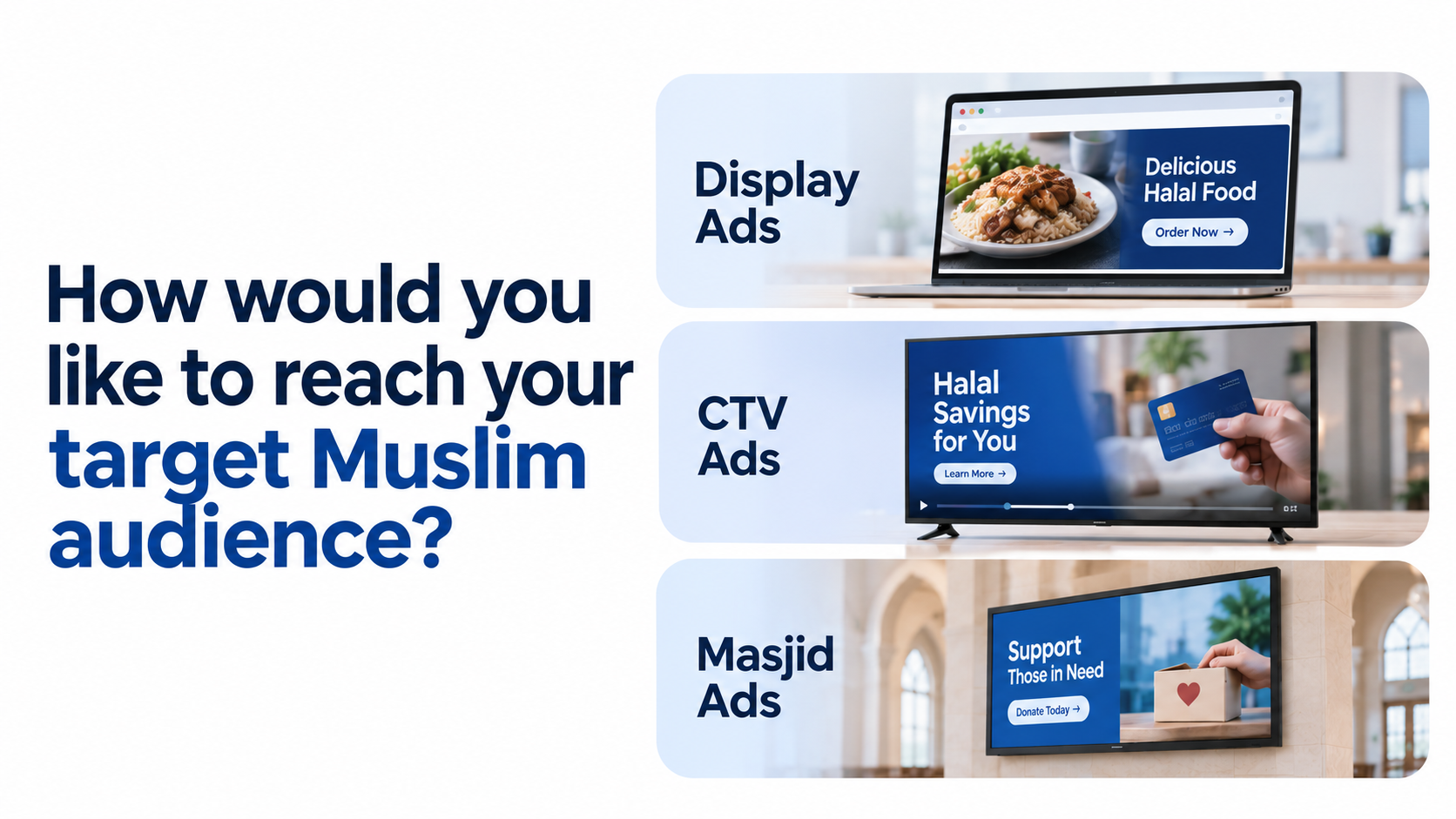
Digital advertising offers several ways to build visibility across the Ramadan season.
Display advertising
Display advertising allows brands to appear across websites and applications accessed on mobile phones, tablets and computers. It can support awareness, product discovery, promotional campaigns and continued visibility throughout Ramadan.
Relevant placements and well-designed creative help a campaign reach people while they browse content and use digital services.
Connected TV advertising
Connected TV (CTV) gives brands access to advertising opportunities on internet-connected televisions and streaming environments.
Video can communicate a brand story, demonstrate a product or introduce a seasonal campaign in a larger-screen setting. CTV can complement digital display activity and help extend a campaign across different viewing environments.
Masjid advertising
Digital screens inside participating mosques provide another environment for reaching Muslim communities.
Masjid advertising can be particularly relevant for organisations offering services, products or initiatives connected to local communities. Creative should be clear, respectful and appropriate for the setting.
Muslim Ad Network (MAN) provides advertisers with access to display advertising, connected TV and masjid advertising through one network.
This gives brands the ability to plan campaigns across digital devices and participating mosque screens, supporting a broader approach to reaching Muslim audiences.
Campaign requirements differ by business. Some brands may prioritise digital visibility, while others may benefit from combining multiple channels. The right mix depends on the campaign objective, audience, budget and creative assets available.
Planning early also gives advertisers more time to organise their media requirements, prepare creative and secure suitable campaign placements.
9. Build relationships that continue beyond Eid
Ramadan and Eid create a significant seasonal opportunity, but the relationship between a brand and its customers can continue throughout the Islamic calendar.
After Eid al-Fitr, Dhul Hijjah and Eid al-Adha bring further moments of religious and community significance. Other occasions, local events and everyday consumer needs continue throughout the year.
Brands that communicate consistently can build familiarity over time. A customer who discovers a business during Ramadan may return for a product, service or experience months later.
This requires a considered approach to the annual marketing calendar. Brands can maintain visibility after Ramadan, communicate around relevant occasions and continue providing useful information to their audiences.
Consistency helps consumers recognise a brand and understand what it offers. A seasonal campaign can create an introduction, while thoughtful communication throughout the year gives that relationship room to develop.
The preparation starts now
Use the coming weeks to build your strategy, prepare your creative and organise your media placements. A considered Ramadan campaign can create value during the season and give your brand a stronger foundation for the months that follow.
Secure your Ramadan campaign inventory today: advertise.muslimadnetwork.com
Reach us for customized planning: sales@muslimadnetwork.com