
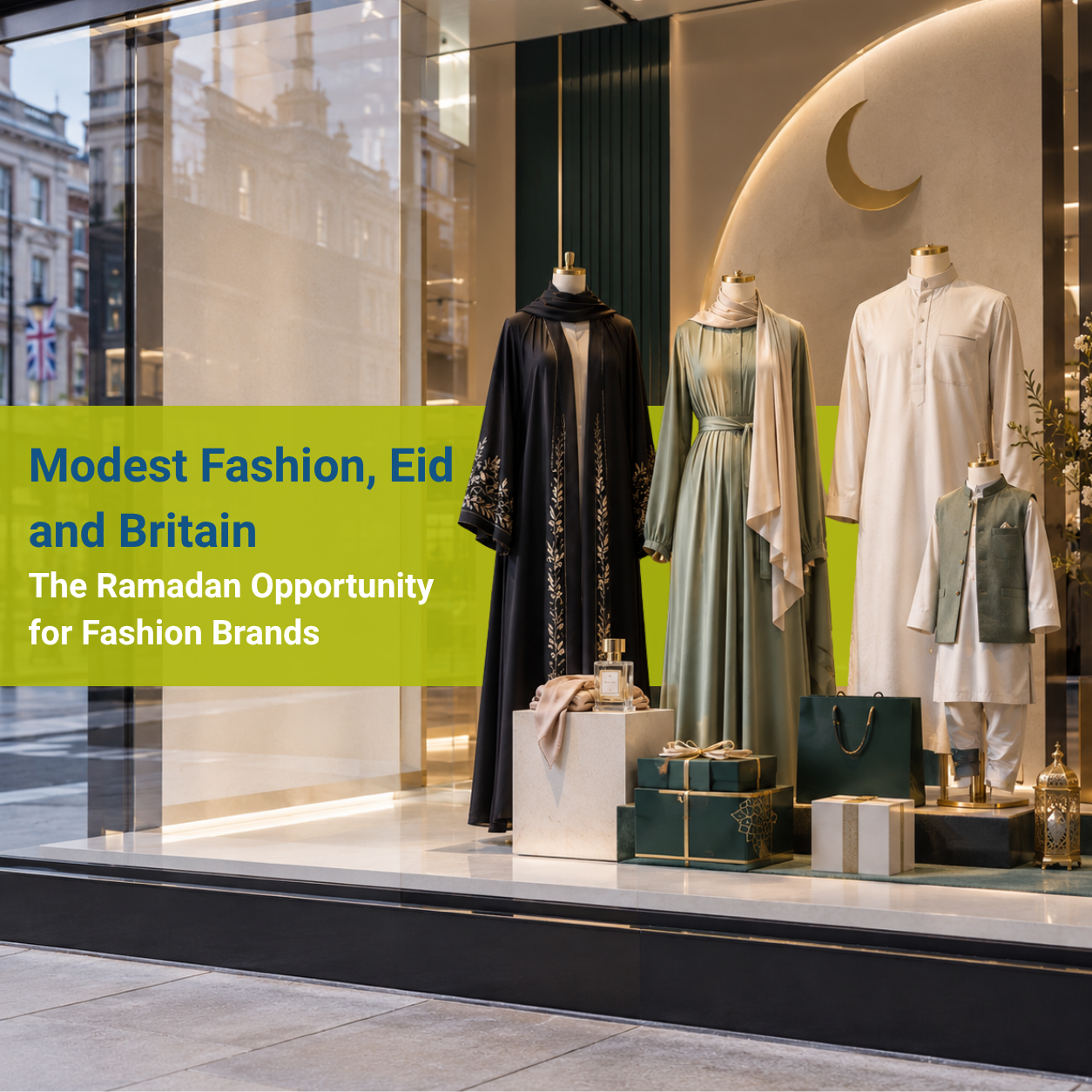
Ramadan changes more than what British Muslim households put into their shopping baskets. As the month progresses, attention also turns towards clothing, personal style, Eid preparations and gifts for family and friends.
Ramadan and Eid have become an important period for fashion retailers, independent clothing businesses, online brands and gift sellers. From abayas and hijabs to dresses, suits, fragrances and Eid gifts, the period creates a noticeable increase in demand for products that combine personal style, cultural identity and the celebration of Eid.
So, how much does this part of the Ramadan economy contribute?
According to Equi’s 2025 Ramadan research, British Muslims spend an estimated £200 million to £300 million during Ramadan on clothes and gifts across high-street retailers, independent shops, pop-up souks and bazaars. The estimate includes Ramadan and Eid clothing, gifts and related purchases.
That puts fashion and gifting alongside groceries, charity and travel as important parts of Britain’s wider Ramadan economy.
Ramadan Brings Fashion Into Focus
The month brings changes in routine, more social gatherings, invitations to iftar, community events and, eventually, Eid al-Fitr. Clothing becomes part of preparing for those occasions.
Eid, in particular, creates a strong reason to shop. Families may purchase new outfits for children, women may look for an abaya or dress for Eid prayers and gatherings, while men may buy a new thobe, kurta, shirt or other traditional or contemporary clothing.
The choices are not limited to traditional clothing.
British Muslim consumers shop across high-street retailers, independent businesses, specialist modest-fashion brands and online marketplaces. Many combine mainstream fashion with modest styling, cultural clothing and religious preferences.
This has helped make modest fashion a much broader part of Britain’s fashion landscape.
Muslim Modest Fashion Is No Longer a Niche Conversation
The demand for modest clothing has been documented in UK research for years.
A 2023 academic study from Bournemouth University, Female Muslim Identity and Modest Clothing Consumption in the UK, examined the fashion experiences of Muslim women from seven ethnicities living in the UK. The research found that Muslim identity plays an important role in fashion consumption and highlighted concerns around choice and availability.
The opportunity has also become increasingly visible to mainstream retailers.
Equi’s 2025 research highlights examples including ASOS creating a modest fashion edit featuring influencer Shahd Batal, while M&S, Next and other retailers have developed products and campaigns that recognise Muslim consumers during Ramadan and Eid.
This reflects an important change in the market.
Muslim consumers do not necessarily want to shop exclusively from Muslim-focused brands. Many want the same things other consumers want from fashion: choice, quality, good design, convenience and a range of prices.
The difference is that the products also need to work with their preferences around modesty, culture and occasion.
From the High Street to Independent Businesses
The Ramadan fashion economy is not built only by major retailers.
Independent Asian clothing shops, specialist modest-fashion businesses and local retailers continue to play an important role. Equi’s research notes that many British Muslims purchase traditional cultural clothing from independent shops because they offer authenticity, specialised clothing and a broader range of traditional styles and sizes.
These businesses can become particularly important in the weeks leading up to Eid.
A local shop may carry abayas, hijabs, kurtas, salwar kameez, sarees or jubbahs. An online specialist may offer modest dresses, prayerwear or contemporary Islamic fashion. Pop-up souks and community markets can bring several businesses together in one place.
The result is a fashion ecosystem that stretches from established high-street retailers to small family-owned businesses.
Eid Is Also a Gifting Season
Clothing is only one part of the opportunity. Fragrance, beauty products, accessories, homeware, children’s products, confectionery, greeting cards and other personal gifts can all become part of Eid shopping.
Equi’s 2025 report highlights Eid gift offerings from retailers including Argos, Harvey Nichols and Next, alongside specialist businesses creating culturally relevant products for Muslim consumers.
The growth of Eid gifting also means that brands do not necessarily need to sell specifically Islamic products to participate in the season.
A fragrance brand can position a product as an Eid gift. A fashion retailer can curate an occasionwear collection. A beauty company can create a gifting edit. A department store can make Eid shopping easier through dedicated product collections.
The opportunity comes from understanding the occasion rather than simply adding a crescent moon to an advertisement.
The Opportunity Extends Beyond Ramadan
Ramadan creates a concentrated period of attention, but modest fashion is not a seasonal market.
Research by Mud Orange on modest fashion among British Muslims]() looked at the experiences and expectations of British Muslim consumers and highlighted the opportunity for brands to engage with Muslim consumers beyond Ramadan alone.
This is an important point for retailers.
A brand that only appears during Ramadan may generate short-term attention, but a brand that understands Muslim consumers throughout the year has more opportunities to build familiarity and trust.
Modest clothing can be relevant for work, university, travel, family occasions, everyday wear and special events throughout the year.
The same applies to gifting.
Eid is a major gifting occasion, but Muslims also purchase gifts for weddings, birthdays, new babies, graduations, family celebrations and other occasions.
What Does This Mean for Fashion and Retail Brands?
The £200 million to £300 million estimate gives brands an indication of the scale of clothing and gifting activity connected to Ramadan and Eid in Britain. But the opportunity is not simply about putting more products in front of Muslim consumers. It is about understanding what they are looking for.
For a fashion retailer, that may mean offering longer lengths, relaxed silhouettes, layering options and appropriate occasionwear alongside existing collections.
For a beauty or fragrance brand, it may mean creating an Eid gifting collection that feels natural rather than tokenistic.
For a department store, it could mean making Eid shopping easier to discover online and in-store.
For smaller businesses, Ramadan and Eid can provide an opportunity to reach customers who are actively looking for clothing and gifts for themselves and their families.
The strongest campaigns are likely to be those that understand the occasion, offer something useful and communicate with Muslim consumers as customers rather than as a marketing category.
A Growing Part of Britain’s Ramadan Economy
Equi’s research estimated that British Muslims spend between £200 million and £300 million during Ramadan on clothes and gifts across high-street retailers, independent shops and pop-up souks and bazaars. The research also points to significant future growth as the British Muslim middle class develops and retailers expand their offerings.
The figure sits within a much larger Ramadan economy.
Equi’s wider Ramadan research estimates Ramadan-related economic activity in Britain at approximately £1.3 billion, with around £640 million attributed to retail spending.
Fashion and gifting are therefore not isolated from the rest of Ramadan.
They sit alongside groceries, restaurants, charities, travel companies, local businesses and digital services that all experience changes in consumer behaviour during the month.
What Brands Can Learn
Muslim consumers are looking for style, quality, convenience and choice just like everyone else. They may also be looking for products that fit their religious values, cultural backgrounds and the occasions they are preparing for.
Brands that understand those needs have an opportunity to participate in one of Britain’s increasingly visible retail seasons. The £200 million to £300 million estimate gives us a sense of the scale.
The bigger story is what that spending tells us about how Ramadan and Eid are becoming part of Britain’s wider consumer landscape. Fashion is only one part of it.
To connect with the high intent British Muslim consumers, get your campaign launched with us. advertise.muslimadnetwork.com
Contact us for queries: sales@muslimadnetwork.com