
In our last article, we looked at the impact of Ramadan grocery shopping on Britain's economy, from supermarket sales and food retailers to manufacturers, wholesalers and the wider supply chain. We saw how Ramadan spending reaches far beyond specialist retailers and becomes part of Britain's mainstream consumer economy.
Today, we turn to another major part of Ramadan activity: charity and giving.
Ramadan is one of the most important periods of the year for charitable giving among British Muslims. While the purpose of this giving is primarily to support people and communities in need, the scale of donations also makes the Muslim community an important contributor to Britain's wider charity and third sector.
British Muslims Give Billions Each Year
The scale of British Muslim charitable giving is significant throughout the year, not only during Ramadan.
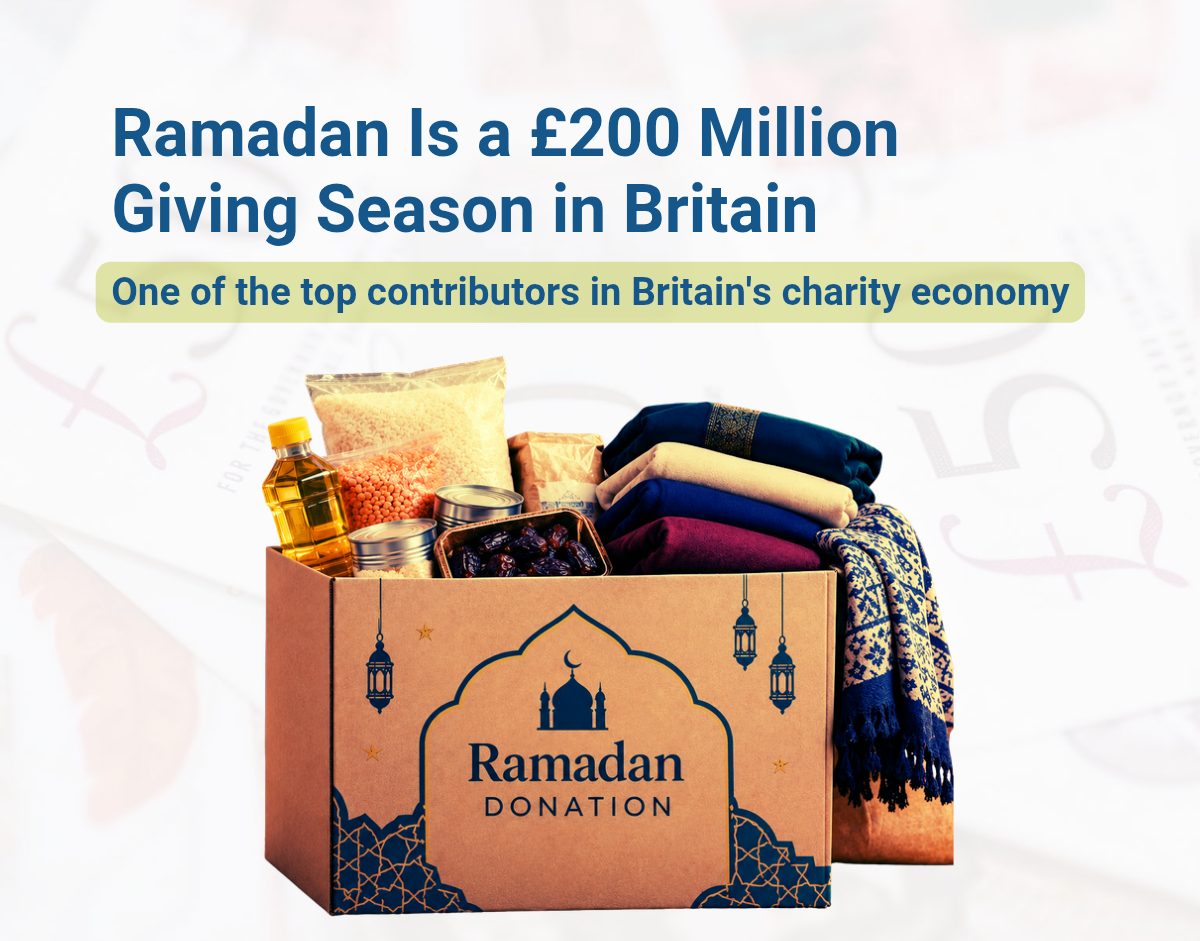
Research cited by the Muslim Charities Forum found that British Muslims donated an estimated £1.48 billion to £2.22 billion in 2024. The Muslim Charities Forum estimates that at least £200 million of this total was given during Ramadan alone.
The same research reported an average annual contribution of around £708 among Muslim donors, more than four times the amount reported for non-religious donors. The figures highlight how deeply charitable giving is embedded within Britain's Muslim communities and how important Muslim donors are to the wider charity sector.
These numbers should not be viewed simply as another category of consumer spending. Charity exists to create social impact, whether that means providing food, supporting families, funding healthcare, responding to humanitarian emergencies or helping communities facing financial hardship. However, significant levels of giving also support a wider network of organisations, people, technology and services that make charitable work possible.
Where Does Ramadan Giving Go?
A large proportion of Ramadan giving supports humanitarian causes overseas, particularly during major crises. At the same time, British Muslim giving also supports people and organisations within the UK.
The distinction between zakat and sadaqah is important here. Zakat is a compulsory form of charitable giving for eligible Muslims based on their wealth, while sadaqah is voluntary giving that can be made at any level throughout the year.
During Ramadan, both forms of giving can increase as individuals choose to make donations to causes that matter to them.
The scale of this activity can be seen in the fundraising results reported after Ramadan 2025. Muslim Hands raised nearly £10.4 million during the month, including just over £6.5 million in zakat, according to reporting by Hyphen. Appeals supporting Palestine and other humanitarian causes were among the major areas attracting donations.
Giving also supports local needs. British Muslim charities provide assistance to people experiencing financial hardship, food insecurity, homelessness and other challenges within the UK. In 2025, Muslim Aid and the National Zakat Foundation distributed £100,000 in zakat to support Muslims experiencing financial hardship in Britain.
This creates a much broader picture of Ramadan giving. It is not simply money leaving British households and going overseas. A significant portion supports UK organisations, local communities and charitable infrastructure.
The Charity Economy Behind the Donation
A £20 or £50 donation may look like a simple transaction between an individual and a charity, but modern fundraising involves a much wider ecosystem.
Charities need employees, volunteers, fundraising teams, digital platforms, payment systems, communications, marketing, technology, accounting, compliance, logistics and administration. Larger humanitarian organisations also work with local partners and suppliers in the countries where their programmes operate.
Britain's Muslim charitable sector therefore represents a substantial network of organisations and people working to turn donations into social impact.
The Muslim Charities Forum itself represents more than 300 charities and community organisations working in the UK and internationally. This gives an indication of the breadth of the sector and the number of organisations involved in serving Muslim communities and wider humanitarian causes.
The economic contribution should not be confused with the purpose of charitable giving. A donation is ultimately intended to create social benefit, not commercial profit. Yet the infrastructure required to deliver that benefit forms an important part of Britain's wider third sector.
Ramadan Has Become a Major Digital Fundraising Season
The way people give has also changed.
Digital fundraising means donors can move from seeing an appeal on social media to making a donation within minutes. Charity websites, mobile payments, email campaigns, livestreams and social platforms have all become important parts of Ramadan fundraising.
That creates opportunities for charities to communicate their work to audiences at a scale that would have been difficult through traditional fundraising alone.
It also raises the importance of trust.
The Charity Commission's Ramadan guidance has repeatedly warned donors about fake charities, fraudulent websites and messages impersonating genuine organisations. In 2025, the Charity Commission, Muslim Charities Forum and Fundraising Regulator again encouraged people to check a charity's registration and make sure they were donating through genuine channels.
The Charity Commission reiterated the same message during Ramadan 2026, encouraging donors to check registration details and be cautious with unsolicited donation requests.
For charities, trust is therefore not simply a matter of reputation. It is an essential part of fundraising performance.
Gift Aid Adds Another Layer
There is also a specifically British element to charitable giving that can increase the value of eligible donations.
When an eligible UK taxpayer gives to a registered charity through Gift Aid, the charity can claim an additional 25p from the government for every £1 donated, provided the relevant conditions are met.
That means a £20 eligible donation can become £25 for the charity without the donor increasing the original amount they give.
During a period when millions of pounds are being donated, mechanisms such as Gift Aid can make a meaningful difference to the resources available to charities.
What This Means for Brands and Marketers
The scale of Ramadan giving also tells us something important about the Muslim consumer market.
British Muslims are not only participating in Ramadan through grocery shopping, restaurants, travel or clothing. They are also directing significant financial resources towards causes, organisations and communities they care about.
For brands, charities and organisations looking to understand Muslim audiences, this creates an important distinction. Ramadan is not simply a retail opportunity. It is a period when consumer behaviour, philanthropy, community activity and digital engagement all become particularly visible.
Brands that understand this wider context can approach Ramadan more thoughtfully. Supporting a charitable campaign, partnering with a credible organisation, sponsoring community initiatives or simply understanding the causes that matter to Muslim consumers can all be part of a broader Ramadan strategy.
The strongest campaigns are likely to be those that recognise Ramadan as a complete cultural and economic season rather than reducing it to a single category of spending.
Ramadan Giving Is Part of Britain's Wider Story
The estimated £200 million given during Ramadan is only one part of the much larger picture of British Muslim philanthropy.
It represents donations to humanitarian causes, support for people facing hardship, contributions to local communities and funding for organisations delivering vital services. Behind those donations sits an extensive network of charities, workers, volunteers, technology platforms and partners.
Most importantly, the value of this giving cannot be measured only in pounds. Its real impact can be seen in the meals provided, families supported, healthcare delivered, education funded and communities strengthened.
Ramadan makes this generosity particularly visible, but British Muslim charitable giving continues throughout the year.
In our last article, we looked at how Ramadan grocery shopping contributes to Britain's food and retail economy. Today, we looked at the charity sector and the scale of Muslim giving.
Next, we will turn to another major part of Ramadan activity: modest fashion and gifting, followed by travel and the opportunities these sectors create for brands seeking to understand and reach Muslim consumers across Britain.
For brands looking at the Ramadan market, the bigger picture is becoming clear. Ramadan is not one industry or one type of spending. It is a season that touches multiple parts of Britain's economy and society.
If you're looking to reach the UK Muslim Donors, this is your time! Set up you campaign today: advertise.muslimadnetwork.com
Contact us: sales@muslimadnetwork.com