
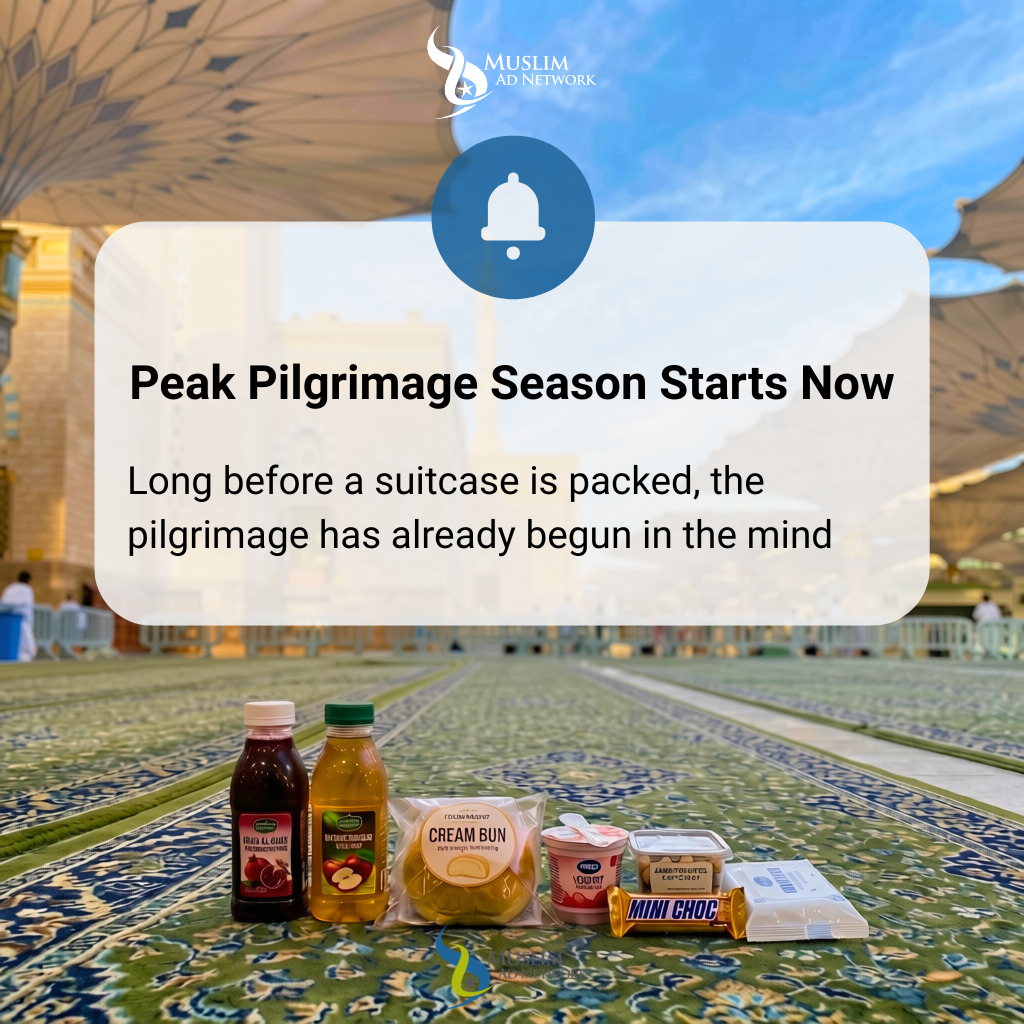
Long before a suitcase is packed, the pilgrimage has already begun in the mind
A quiet intention that comes up in conversations with a spouse or parents, a promise to oneself that perhaps next year will be the year. For others, the possibility appears more suddenly: circumstances change, savings finally come together, work becomes manageable, or a family realizes that they can make the journey after all.
That is what makes the months ahead so important for Hajj and Umrah agencies. The market may not yet look busy, but people are already thinking. Hajj planning is coming into focus, while Ramadan 2027 is expected in early February, bringing with it another significant period of Umrah demand. By the time the familiar flood of pilgrimage offers appears across social media, many prospective travelers will already have started forming opinions about where, when and with whom they might go.
The season, in other words, starts earlier than it appears.
Hajj and Umrah meet people at different moments in their lives
Hajj and Umrah also meet people at very different points in their lives. Hajj carries its own profound significance as one of the pillars of Islam and, for those who are able to undertake it, can represent the fulfillment of a hope held for years. A family may have saved for it gradually. Parents may be preparing to go with their children, or adult children may finally be able to take their parents.
But not every Muslim who longs to visit the holy cities is able to take the time Hajj requires.
For someone working a demanding job, taking several weeks away may simply not be possible. A business owner may not be able to leave their company for an extended period. Parents may have responsibilities at home, while finances, health and family circumstances can all influence when a pilgrimage becomes possible.
This is part of why Umrah holds such an important place in the lives of so many Muslims. It is not simply a shorter Hajj, nor should it be presented that way. It is its own meaningful journey, and for many people it becomes the opportunity to visit Makkah and Madinah when the circumstances of their lives allow it.
For someone who cannot take a month away from work, a shorter Umrah may make the journey possible. For a family that is not yet ready for Hajj, it may be an opportunity to make the trip together. And for those drawn to the spiritual atmosphere of Ramadan, performing Umrah during the holy month can carry a significance all its own.
This makes the months ahead particularly interesting. Hajj and Ramadan Umrah are not the same market, but they create overlapping periods of attention around one of the most meaningful forms of travel a Muslim can undertake.
And attention is where the competition will begin.
An old problem with seasonal marketing: by the time everyone starts advertising, everyone is advertising.
As the season approaches, agencies will naturally turn their attention toward marketing. Packages will be announced, hotel arrangements discussed and group departures promoted. Advertising budgets will increase as businesses compete for a share of the travelers beginning to make decisions.
The result can be a sea of beautiful photographs, polished packages and familiar promises, all competing for the same few seconds of someone's attention.
For an agency, the more interesting question is not simply how much attention it can buy. It is whether it is buying attention from the people it actually wants to reach.
Hajj and Umrah are unusually specific products. The audience is not simply people who enjoy traveling or people who happen to be considering a holiday. The reason for the journey is directly connected to their faith.
A significant amount of digital advertising still relies on broad platforms and broad audiences, allowing algorithms to identify prospective customers within enormous pools of users. For mass-market products, that approach can be perfectly rational. For pilgrimage travel, it is worth asking whether the same logic makes sense.
If the people an agency wants to reach are Muslim, there is a compelling case for placing part of that media strategy closer to Muslim audiences themselves.
Muslim Ad Network offers a different proposition. Instead of relying entirely on broad targeting to identify Muslims within a much larger population, they allow businesses to communicate within digital environments created specifically around Muslim audiences and their interests.
The distinction is not merely about targeting. It is about context.
Reach the people for whom the message has meaning
A person reading about preparing for Hajj, following Muslim lifestyle content, researching Ramadan Umrah or spending time in a Muslim-focused digital environment is already much closer to the conversation an agency wants to have.
That does not guarantee a booking, of course. But it can make the marketing dollar more intentional. The goal should not be to reach everyone. It should be to reach the people for whom the message has meaning.
That becomes even more important when the product itself carries such emotional weight. Choosing a Hajj or Umrah agency is not quite like choosing a hotel for a weekend away. A traveler may be considering their elderly parents, worrying about their first pilgrimage, thinking about the logistics of a large family group or simply trying to make sense of a process they have never experienced before.
They are looking for reassurance as much as information.
And reassurance is rarely created by one advertisement.
It develops through familiarity.
Perhaps it is an agency they have seen several times over the past few months. Perhaps they came across a useful piece of advice when they had a question. Perhaps they watched a video showing how the agency supports pilgrims on the ground. Even something as simple as a goodie bag can tell that story!
A carefully prepared Hajj or Umrah bag may contain practical things: a guide, toiletries, prayer materials, snacks or other essentials. None of these items, individually, is extraordinary. What matters is the thought behind them. Someone anticipated the needs of a pilgrim and prepared for them.
That philosophy can become part of an agency's identity.
The best agencies have countless such details woven into the experience, from the first conversation to the final days of the journey. They know what first-time pilgrims worry about. They understand that traveling with an elderly parent can change the experience completely. They recognize that the person asking a seemingly simple question may actually be looking for reassurance that everything will be okay.
These are the things worth communicating before the booking.
By the time it's middle of the peak season arrives, the decision may already be made
Because good marketing in this category should not simply tell people what an agency sells. It should give them a sense of how that agency thinks. That is particularly valuable now, before the market reaches its peak.
For travelers considering Ramadan Umrah, that leaves a surprisingly short runway for research, planning and decision-making. Hajj planning brings another wave of attention shortly afterward.
The people who will eventually book are therefore already entering the consideration period, even if they have not raised their hands yet.
They may be watching quietly. And quiet audiences are still audiences.
This is where timing becomes a strategic advantage. An agency that waits until the market is crowded has to compete for attention at its most expensive and least distinctive. An agency that begins reaching Muslim audiences earlier has more opportunity to build recognition, establish credibility and become part of the consideration set before the booking decision arrives.
That does not mean flooding people with advertisements months in advance. Quite the opposite. It means using the time intelligently.
Reach people where they already spend time. Give them information worth remembering. Let them see the people behind the business. Show them the care that goes into the experience. And when it is time to introduce the package, it is no longer arriving from a stranger.
It is arriving from an agency they already know.
For pilgrimage businesses, that may be the most valuable advantage of all. The coming season will undoubtedly bring more competition. More agencies will be visible, more packages will be promoted and more marketing budgets will be put to work.
But the question is not who can make the most noise. It is who can reach the right Muslims early enough to become familiar, relevant and trusted before the decision is made.
Hajj may be a journey that some people spend years preparing for. Umrah may be the journey that becomes possible when life finally allows it. For both, the meaning extends far beyond the logistics of travel.
The agencies serving these travelers have an opportunity to reflect that in the way they market themselves.
Not by shouting louder. By understanding the audience more closely.
Not by spraying a message across the internet and hoping the right people see it. By putting that message in front of the people for whom it actually matters.
And not by waiting for peak season to arrive.
Because by the time everyone else sees the rush, the people who are going may have already started choosing who they trust to take them there.
Peak pilgrimage season starts now. Start showing up to your actual audience today! advertise.muslimadnetwork.com
Reach us: sales@muslimadnetwork.com