
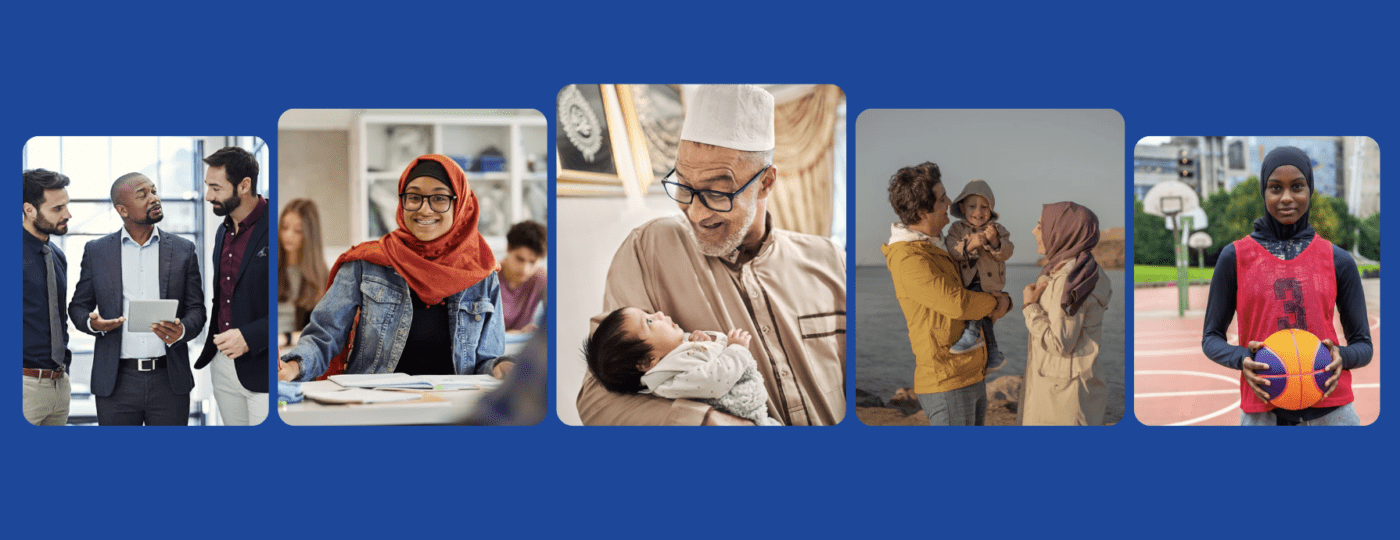
When you think about “the Muslim audience,” you may picture a monolith, but that is exactly what makes targeting them properly such a missed opportunity. The global Muslim population is large, diverse, growing, and increasingly influential in consumer spending and charitable giving. For businesses and charities looking to connect authentically with Muslim consumers and make a real impact, building a clear picture of who you are talking to matters more than ever.
But why now?
A Rising Tide: Size and Spending Power of the Muslim Market
Muslims worldwide numbered around 1.9 billion in 2020. By 2030, estimates suggest there could be roughly 2 billion practicing Muslims globally. This makes Islam one of the fastest growing major faith groups in the world.
This growing population translates into real economic power. The “Islamic economy,” which covers sectors such as halal food, modest fashion, media, cosmetics, finance, and halal-friendly travel, has become a multi-trillion dollar global footprint.
For example, halal food alone has long constituted a core part of the Muslim spend.
Meanwhile, the travel sector is rebounding strongly after the global slowdown, with international arrivals in 2024 approaching pre-pandemic levels, bringing renewed demand for destinations and services that cater to Muslim travellers’ values and needs from halal meals and prayer-friendly facilities to family-safe and modest conditions.
Similarly, Muslim communities in the UK have demonstrated sustained generosity. One recent survey showed the average British Muslim donated around £708 during the year, compared with £165 among non-Muslim adults.
These numbers tell a clear story. Muslim consumers are a significant, growing, and active market segment with spending power and for charities particularly, a community with strong intent to give.
More Than One Type: Understanding the Main Muslim Consumer Personas
To market effectively to Muslims, it is essential to understand that not every Muslim consumer is motivated by the same things. While religion and shared values often form a common foundation, behaviours, needs, and motivations vary widely by age, lifestyle, digital habits, and economic status.
Below are three broad personas that many businesses successfully engage across industries.
The Values-Driven Consumer
Many Muslims anchor their purchasing decisions around ethical, religious, and community based values. This is seen clearly in charitable giving through zakat and sadaqah, but it also extends to everyday purchasing choices such as food, finance, education, healthcare, and lifestyle brands.
In the UK, Muslim charitable giving alone is substantial. According to one analysis, donations to Muslim charities in 2022 were estimated at £145 million to £152 million, with strong seasonal spikes during Ramadan.
This persona values trust, transparency, and alignment with their beliefs. When a business is clear about how its products are sourced, how its services operate, and how it treats communities and staff, engagement increases significantly.
For brands, this means communicating purpose and accountability clearly. Show where money goes. Show how products are made. Show who benefits. This is especially true during high-intent periods such as Ramadan when generosity, reflection, and conscious spending increase.
Example: A charity using transparent zakat reporting and monthly impact emails builds a base of loyal recurring supporters rather than one-time donors.
The Conscious Muslim Consumer
Beyond giving, many Muslims want to live and consume in ways consistent with their values. This includes halal food, modest fashion, ethical cosmetics, halal-compliant finance, technology, education, and lifestyle services. The global demand for halal-certified and value-aligned goods continues to rise.
This persona is not driven purely by price. They are driven by confidence, quality, and alignment. They want reassurance that what they are buying fits within both their lifestyle and their faith.
Brands that win with this audience do not rely on generic marketing. They clearly highlight certifications, ethical sourcing, modest-friendly design, and family suitability where relevant. Trust signals matter greatly.
Example: A halal personal care brand that highlights certification, cruelty-free production, and sustainable sourcing will outperform a generic competitor in Muslim markets even at a higher price point.
The Digitally Connected Muslim
Increasingly, Muslims, especially younger generations, look for inspiration, brands, and products online. Social media, messaging apps, influencer content, and mobile-first ads are often their first touchpoint with a business.
As the Muslim lifestyle economy has expanded, digital-first engagement has become essential for brands seeking to capture attention and build trust at scale.
This persona values authenticity, social proof, convenience, and seamless digital experiences. They respond to storytelling, short-form video, testimonials, mobile-optimized websites, and peer recommendations. Engagement peaks during key moments such as Ramadan, Eid, and seasonal sales periods.
Example: A halal travel operator collaborating with Muslim creators to document real experiences across food, accommodation, and family activities builds far more trust than traditional brochure-style advertising.
Why These Personas Matter
Treating Muslims as one generic group is one of the most common mistakes brands make. Different segments respond to different motivations such as faith-based values, lifestyle preferences, status, convenience, and digital experience.
By understanding these motivations, your marketing speaks to real people instead of assumptions. That shift alone can dramatically improve performance.
For some brands, this means transforming one-off buyers into long-term customers. For others, it means turning fleeting interest into brand loyalty. For many, it means finally unlocking growth within a market that has long been underserved or misunderstood.
How to Apply This Understanding to Your Marketing
Hone in on key dates such as Ramadan, Eid, Hajj, back-to-school periods, and family seasonal moments. These drive natural shifts in spending behavior.
Communicate values clearly such as halal certification, ethical production, modest design, transparency, and community responsibility.
Use trust-building signals such as independent certification, user reviews, impact reporting, sustainability claims, and authentic testimonials.
Meet your audience where they are with mobile-first experiences, social-first content, flexible digital payments, and fast user journeys.
Segment your audience such as first-time buyers versus loyal customers, families versus young professionals, highly observant versus lifestyle-driven.
The Takeaway
The Muslim consumer market is not one single audience. It is a diverse ecosystem of motivations, behaviours, needs, and expectations. Whether your business operates in retail, finance, technology, education, food, travel, or services, success depends on how well you understand and speak to real people and real values.
If you want your next campaign to resonate deeply and perform well with Muslim audiences, you should approach it through these personas, the values-driven consumer, the conscious shopper, and the digitally connected Muslim. Doing so means speaking with empathy, cultural intelligence, and strategic intent.
If you would like a tailored media strategy or campaign blueprint for reaching Muslim audiences across any industry, contact Muslim Ad Network. Let’s build something that resonates, converts, and delivers real impact.